

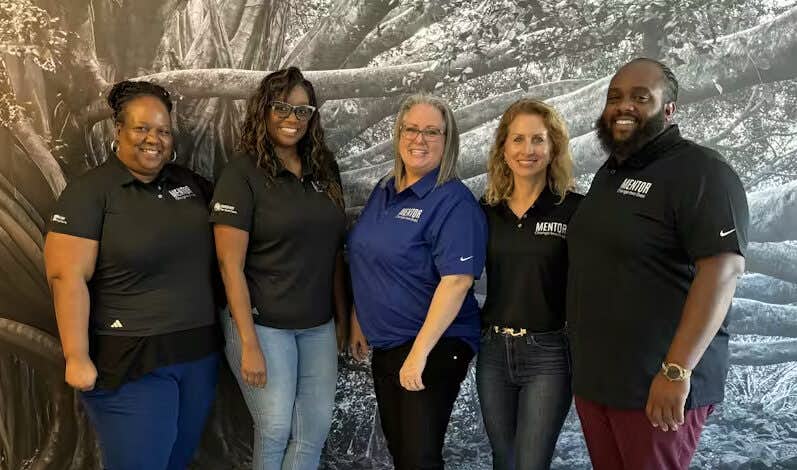
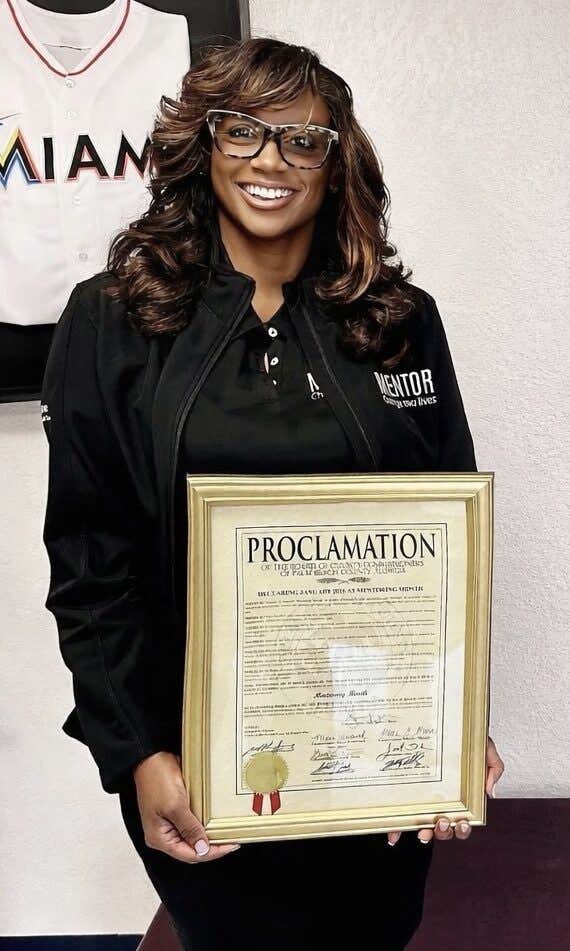
 We’re proud to shine a spotlight on our remarkable Associate Vice President of Mentoring, Gwynette Williams. With her unwavering dedication and passion for mentorship, Gywn has not only led with heart but has also been a driving force in creating meaningful opportunities for learning, growth, and connection across our community. Her leadership is making a lasting, positive impact on youth in Palm Beach County.
In the Q&A below, Gywn opens up about her journey, the transformative power of mentoring, and the lasting impact it can have on individuals and communities. Get to know Gwyn, and discover the heart of her incredible work.
Q: Can you share details about your journey into the mentoring field and what has shaped your approach?
A: I have worked in the mentoring field since July 2024, when I joined United Way of Palm Beach County as Associate Vice President of Mentoring. While my formal role in mentoring leadership is relatively recent—approximately 18 months—my career has been built on over 20 years of transformative human development work across the non-profit sector.
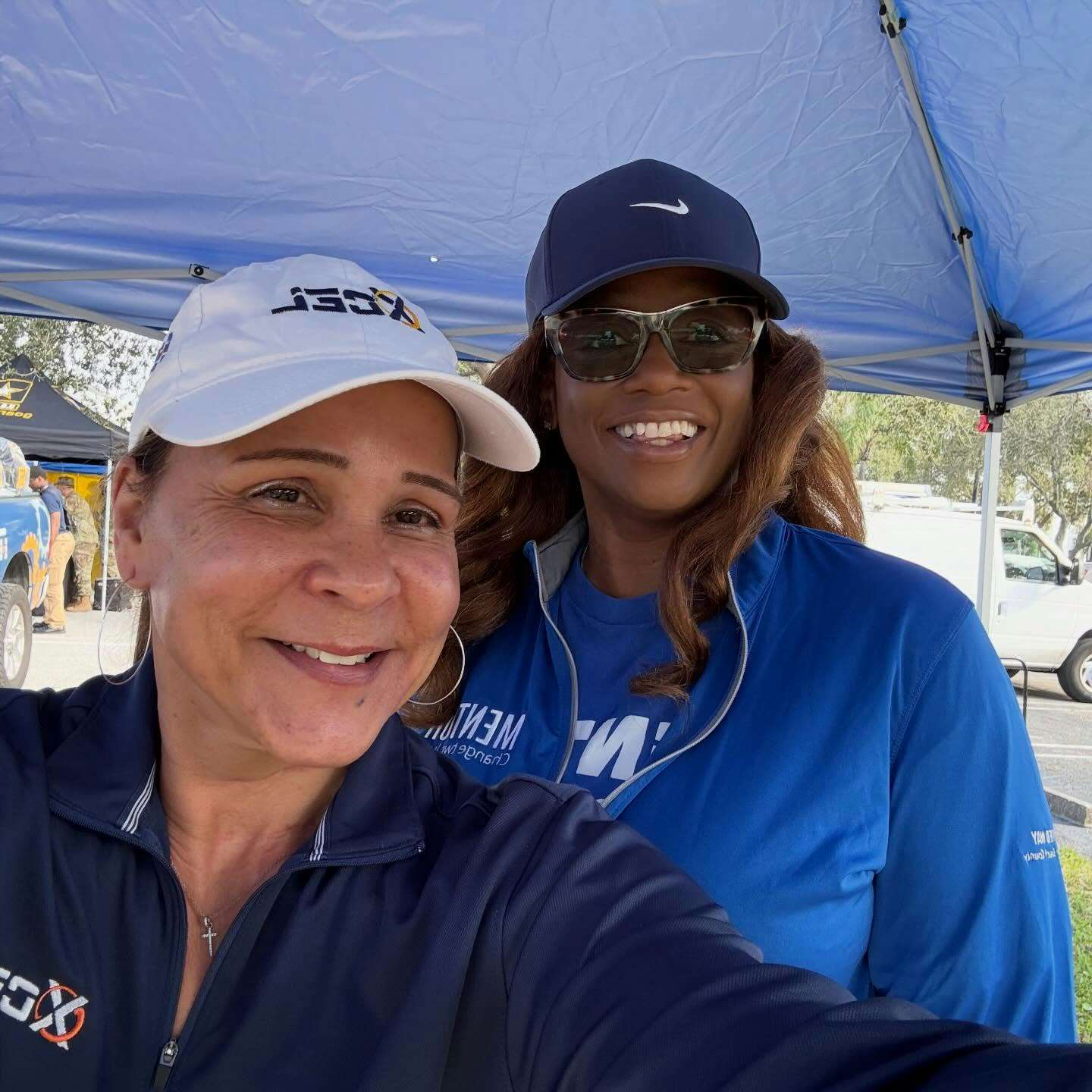 My background in organizational psychology, leadership development, and youth-focused community programs has provided me with a strong foundation for this work. Prior to my current role, I served as Chief Operations Officer at Communities in Schools Palm Beach County (2022-2025), where I led operational strategy and program implementation for youth services. This experience, combined with my decade of work as a professional development coach and trainer, has equipped me with deep expertise in creating systems that support young people’s growth and development.
Q: What do you think are the key qualities of an effective mentor?
A: Based on my experience managing 24 mentoring initiatives and coordinating a network of 50+ programs impacting over 5,500 mentor-mentee relationships annually, I believe effective mentors embody several critical qualities:
Authentic Connection and Active Listening: The foundation of effective mentoring is the ability to genuinely listen and be present. Research shows that mentees thrive when mentors create safe spaces where they can be their authentic selves. Active listening—truly hearing what a young person is saying and reflecting it back—builds trust and demonstrates sincere interest in their journey.
Patience and Commitment: Quality mentoring requires a long-term investment. Studies show that mentoring relationships lasting at least one year produce the most significant outcomes. Effective mentors understand that transformation takes time and remain committed even through challenges.
Guidance Without Prescription: Great mentors guide mentees toward discovering their own answers rather than simply providing solutions. They ask thoughtful, open-ended questions that encourage critical thinking and self-discovery, helping young people develop problem-solving skills they’ll use throughout their lives.
Cultural Humility and Respect: Effective mentors communicate across differences—including background, ethnicity, gender, and lived experiences. They approach relationships with openness, recognizing that mentees bring valuable perspectives and that mentoring is a reciprocal relationship where both parties learn and grow.
Emotional Intelligence and Empathy: Mentors must balance compassion with appropriate boundaries. They recognize when mentees may be facing challenges beyond academics—mental health concerns, family stress, or trauma—and know how to provide holistic support while connecting young people to professional resources when needed.
Role Modeling and Ethical Behavior: Mentors teach through their actions, demonstrating the values, work ethic, and interpersonal skills they hope to instill. For our Level Up program serving justice-involved youth, this modeling is particularly crucial in helping young people envision positive pathways forward.
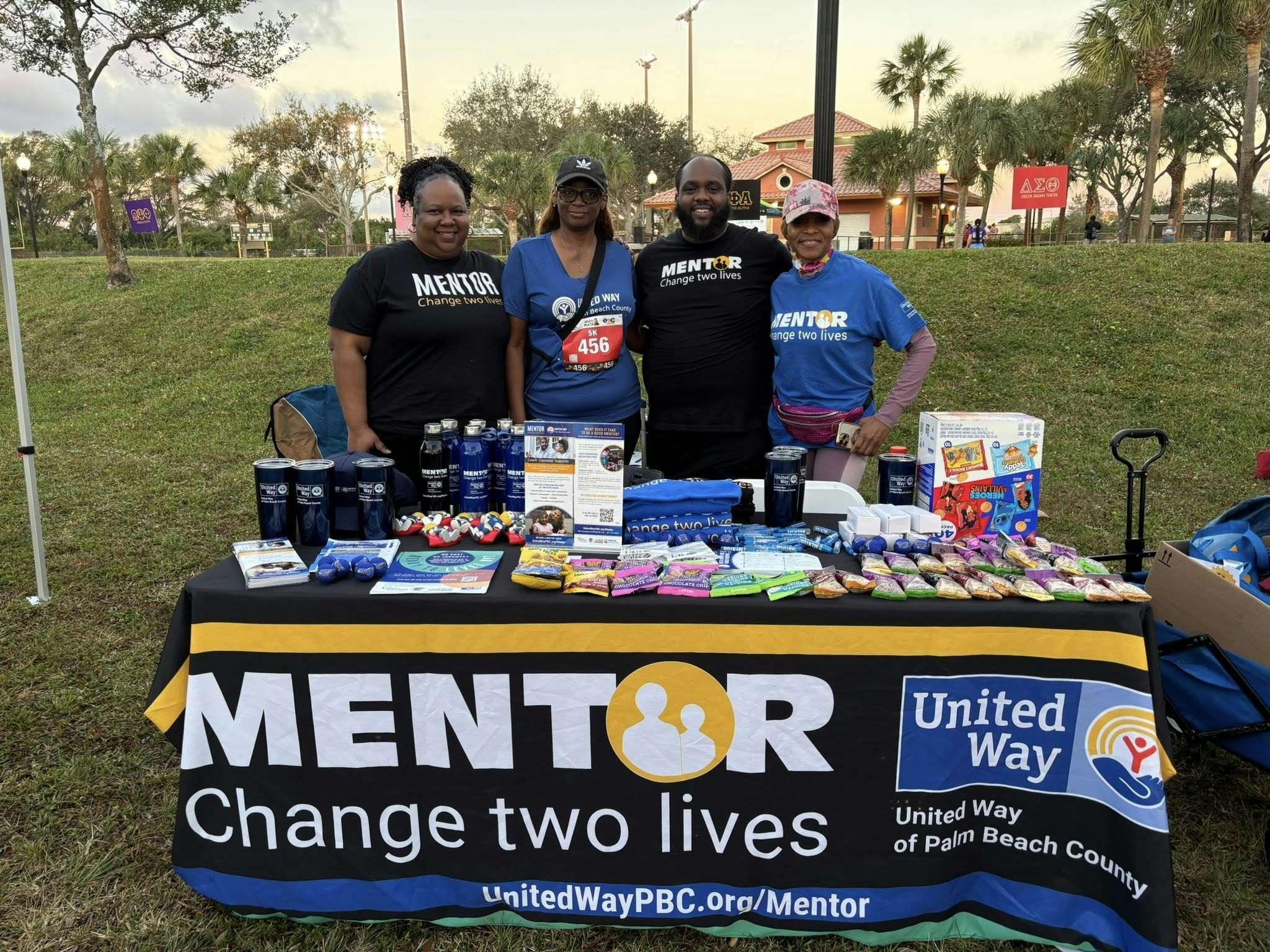
Q: What would you say to someone who is considering becoming a mentor?
A: I would tell them that becoming a mentor is one of the most meaningful investments you can make—not just in a young person’s life, but in the future of our entire community.
You’re changing two lives: Research shows that mentored youth earn 15% more between ages 20-25 and are projected to earn $56,000 more by age 65 than non-mentored peers. They’re 10 percentage points more likely to enroll in college and 40% more likely to graduate high school on time. But here’s what many people don’t realize—mentoring transforms mentors too. You’ll develop leadership skills, gain fresh perspectives, and experience the profound satisfaction of making a tangible difference.
You don’t need to be perfect: One of the biggest misconceptions is that mentors must have all the answers or come from similar backgrounds. What matters most is showing up consistently, listening authentically, and caring deeply. Our most effective mentors are those who are genuinely curious about their mentees’ dreams and challenges, and who approach the relationship with humility and openness to learning.
The need is urgent: In Palm Beach County alone, we have 1,000 children currently waiting for mentors. Nationally, nearly 1 in 3 young people report never having had a mentor, and the gap is even more pronounced for vulnerable populations like LGBTQ+ youth and those involved with the justice system.
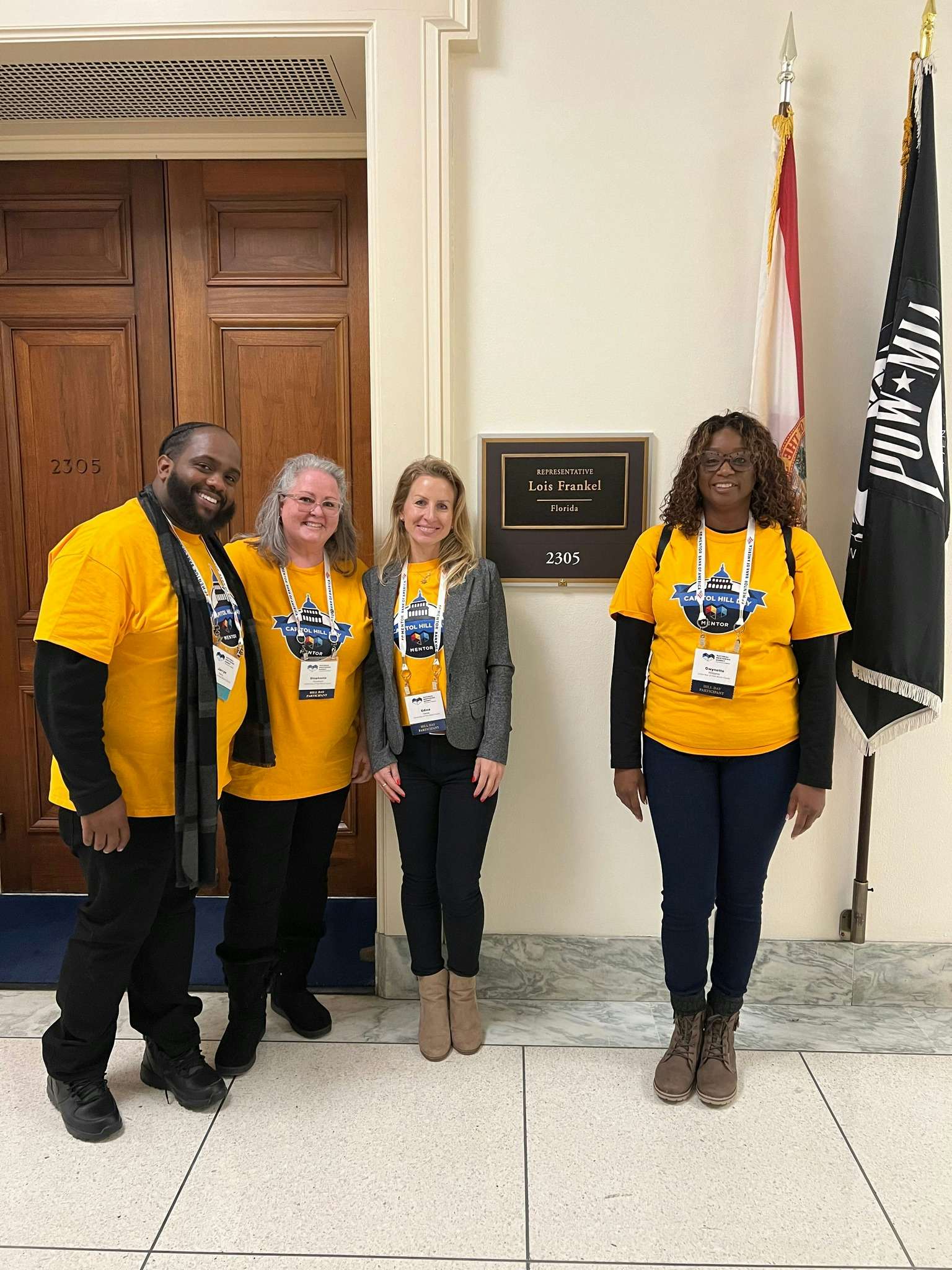
You’re supported every step of the way: Through our Mentor Center, you’ll receive comprehensive training based on the 16 Elements of Effective Practice for Mentoring, ongoing support from program coordinators, and access to a community of fellow mentors. We provide the structure, resources, and guidance to ensure both you and your mentee have a positive, successful experience.
Start where you are: Whether you have two hours a month or can commit to weekly meetings, there’s a mentoring opportunity that fits your schedule. From our traditional one-on-one programs to group mentoring, e-mentoring, and specialized initiatives like our equine-assisted program with Delmar Daughters, we have diverse options that match different interests and availability levels.
Q: How do you envision the future of mentoring at UWPBC?
A: I envision an expanded, data-driven, and increasingly innovative mentoring ecosystem that meets the evolving needs of Palm Beach County’s youth while maintaining the highest standards of quality and impact.
Scaling Impact Through Strategic Growth: We’ve seen tremendous momentum—growing from 5,333 total youth served previously to 5,715 in the current fiscal year. My vision is to continue this expansion strategically, focusing on closing the mentoring gap for our 1,000 waiting children while ensuring every match is high-quality and evidence-based. This means not just increasing quantity but strengthening our capacity-building support for partner agencies through enhanced training, fiscal technical assistance, and data systems.
Deepening Specialization and Innovation: The future includes expanding specialized programs like Level Up for justice-involved youth (ages 11-19) and developing new approaches for underserved populations. I’m excited about innovations like our new Delmar Daughters equine-assisted mentoring program for at-risk teenage girls, which demonstrates how we can meet young people where they are with creative, trauma-informed approaches.
Leveraging Technology and Hybrid Models: The pandemic taught us that virtual and hybrid mentoring can be highly effective when done well. Moving forward, I see us embracing technology to expand geographic reach, accommodate busy schedules, and provide just-in-time mentor training and support. AI-powered matching systems and mobile mentoring apps could help us make more effective mentor-mentee pairings while maintaining the human-centered approach that makes mentoring work.
Strengthening the Evidence Base: As we implement research-based outcome measurements for our 5,500+ youth, I envision creating a robust data infrastructure that allows us to track long-term outcomes, identify what works, and continuously improve our programs. This includes partnering with universities and research institutions to contribute to the national knowledge base on youth mentoring effectiveness.
Building Cross-Sector Partnerships: The future of mentoring at UWPBC involves deeper collaboration across sectors—schools, juvenile justice, workforce development, mental health services, and corporate partners. I see mentoring becoming more integrated into other youth-serving systems, with mentors serving as connectors who help young people access the full range of supports they need.
Advancing Equity and Inclusion: We must continue prioritizing DEIB in our mentoring ecosystem. This means recruiting and supporting mentors from diverse backgrounds, implementing cultural humility training, and ensuring our programs are accessible to LGBTQ+ youth, youth with disabilities, and those from underrepresented communities. Research shows that 95% of mentees value having a mentor from a different background, and we want to honor that while also ensuring young people can see themselves reflected in mentorship opportunities.
 Creating Sustainable Funding Models: To support this vision, I’m focused on diversifying funding streams, demonstrating ROI to existing funders like the Children’s Services Council and Palm Beach County, and making the case for increased investment in mentoring. With government financial gains being 2-3 times greater than program costs, the economic argument for mentoring is compelling—we just need to tell that story effectively.
Ultimately, I envision United Way’s Mentor Center as the premier coordinating hub that sets the standard for quality youth mentoring in Florida and serves as a model for other communities nationwide.
Q: Is there anything else you’d like to share?
A: The transformative power of mentoring is deeply personal to me. Throughout my 20+ years in human development work, I’ve witnessed countless examples of how a caring, consistent adult can literally change the trajectory of a young person’s life. Every young person deserves a champion—an adult who will never give up on them and who believes in their potential. That’s not just a nice saying; it’s the foundation of everything we do at the United Way Mentor Center.
Mentoring is both an art and a science. While we ground our work in the 16 Elements of Effective Practice and use rigorous data to measure outcomes, the magic happens in those everyday moments of connection—when a mentor shows up to a basketball game, helps with homework, or simply listens without judgment. We’re balancing the need for evidence-based practices with the recognition that relationships are at the heart of transformation.
This work requires all of us. Whether you’re a potential mentor, a community member who can spread awareness during National Mentoring Month, a funder who can invest in expanding programs, or an employer who can offer paid volunteer time for employees to mentor, there’s a role for everyone. Our community’s future depends on how well we invest in young people today.
The return on investment extends far beyond economics. Yes, the financial data is compelling—$56,000 in additional lifetime earnings per mentored youth, 2-3x government ROI. But the real returns are measured in reduced recidivism, stronger families, youth who become leaders in their communities, and the breaking of generational cycles of poverty and trauma. When we invest in mentoring, we invest in the social fabric that holds our community together.
I’m deeply honored to lead this work. Being recognized with the Whitney M. Young Jr. Service Award and serving as a Nebraska Afterschool Ambassador Emeritus have reinforced my commitment to this field. At UWPBC, I have the privilege of working alongside dedicated partner agencies, passionate volunteers, incredible funders, and, most importantly, the resilient young people who inspire us every day. Together, we’re not just changing lives—we’re building a brighter future for Palm Beach County, one relationship at a time.
Click here to learn more about mentoring at United Way of Palm Beach County.